Historical Data Center Evaluation
Netherlands EUNL_3: Differences between European nodes and cross-border downloads (2018)
The original test record stated that the performance of the download from mainland China was limited.
 BandwagonHost Guide
The original test record stated that the performance of the download from mainland China was limited.
The sources record hard drive read/write speeds, download times, latency, and routing in both directions, and also list system benchmark scores.
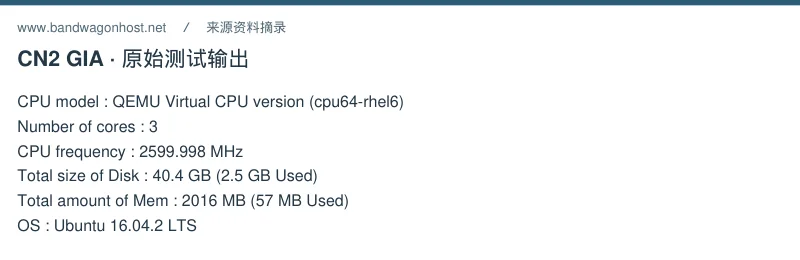
The test subject is a 40G instance of GIA BETA.
The sources are listed separately as hard drive read/write, download, routing, and benchmarking.
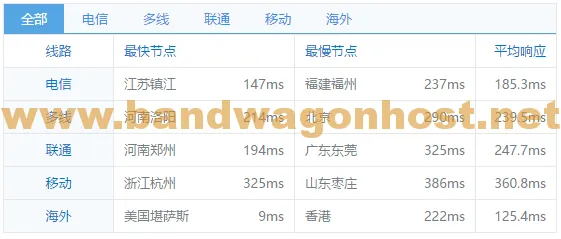
Measure latency and download speeds from actual visitor networks, comparing them over the same time period. Test address, line, and time should be recorded along with the results.
In the previous test, one Shanghai Unicom sample reached about 100 Mbps, but the results were different in other access areas.
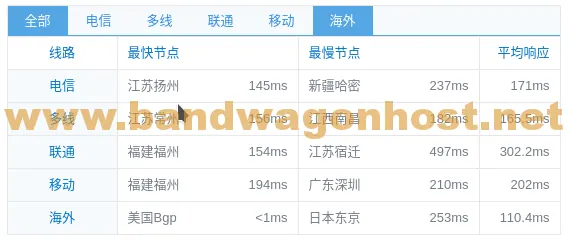
The original test separated data from international testing sites such as Japan, Singapore, London, Seattle, and Hong Kong with data from mainland Chinese operators.
The samples from China Telecom and China Unicom, compared to some mobile samples from the same round, scored over 1200 points in UnixBench.
The return sample was listed separately in this retest.
This article presents further testing of the MCOM data center, showcasing observations based on latency, backhaul, and bandwidth.
In historical sampling, some telecommunications lines had speeds exceeding 100 Mbps, and there were also results from China Unicom and China Mobile.
First, narrow down the options by available regions and budget, then compare the access performance of commonly used networks. Different data centers in the same city may use different lines.
The original tester used their own $46.99 annual subscription for testing, while also mentioning other entry-level prices.
The early records also show the access paths of the three carriers and the hard drive performance of the newly deployed instance.
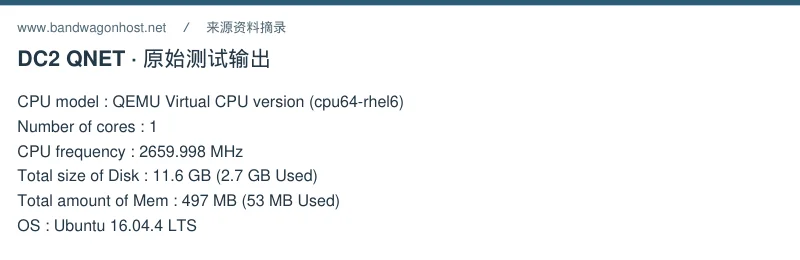
Record and monitor QNET performance after changes in access routes, including outbound, inbound, Ping, and download speeds.
A historical Phoenix instance with an annual fee of $11.99 was used to observe the single-shot effect of different network configurations.
At the time, the test prototype achieved a single transmission speed of 101 MB/s, and the routing sample showed that the outbound and return routes went through PCCW.
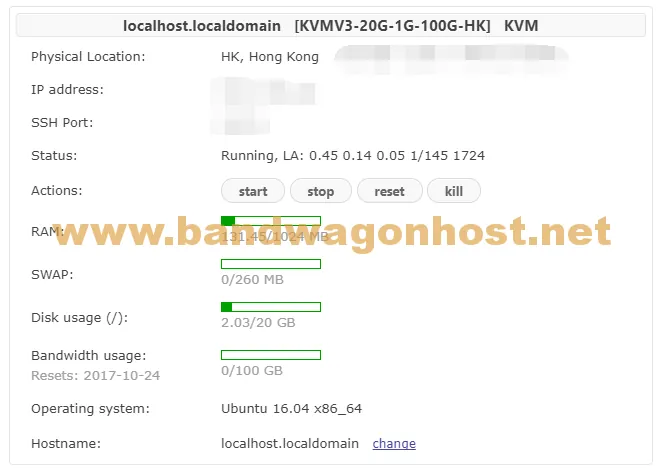
The 2017 comparison used a portable 10G KVM PROMO instance, and after changing the data center, response time, network transmission, and disk read/write data were collected.
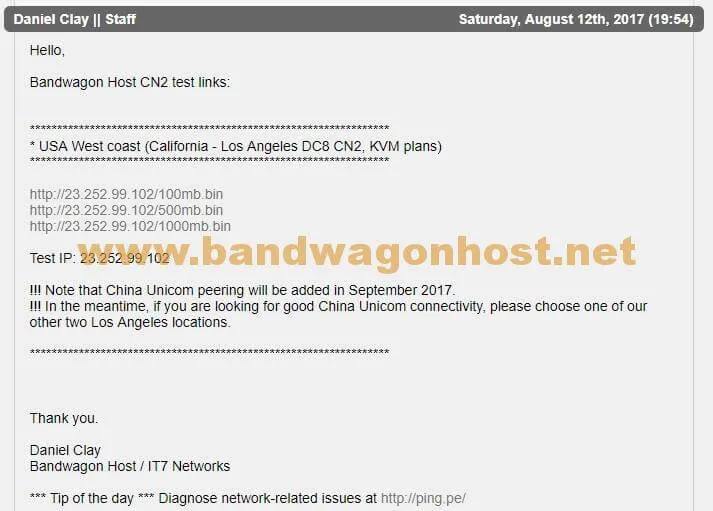
The original records pertain to the CN2 route launch phase, at which time the access progress of China Telecom and China Unicom differed.
The test record was taken at 11 PM on September 22nd, and includes the educational network and the Shanghai test site. CPU and disk performance are also listed separately.