Historical Data Center Evaluation
Los Angeles DC6 vs. DC9: Differences in GIA Series Ports and Payment Terms (2019)
The DC6 packages, compared to the source, range from 2.5 Gbps to 10 Gbps, while the DC9's historical standard package is 1 Gbps.
 BandwagonHost Guide
The DC6 packages, compared to the source, range from 2.5 Gbps to 10 Gbps, while the DC9's historical standard package is 1 Gbps.
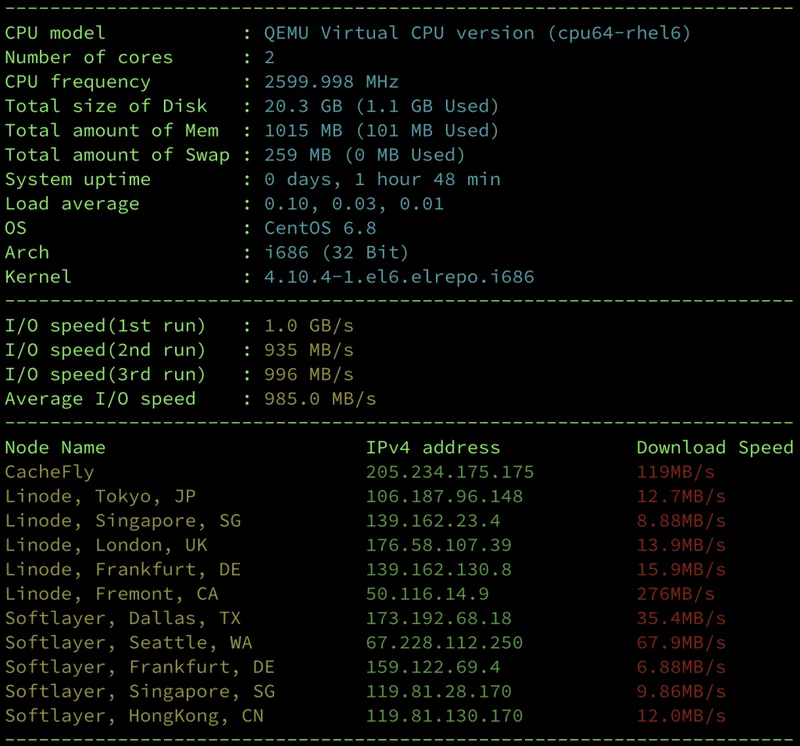
There were differences in disk read/write speeds during the retest compared to the first day of operation.
USCA_6 refers to Los Angeles DC6 CN2 GIA-E.
The records when the data center is put into use cover hard drive performance, file downloads, and return paths.
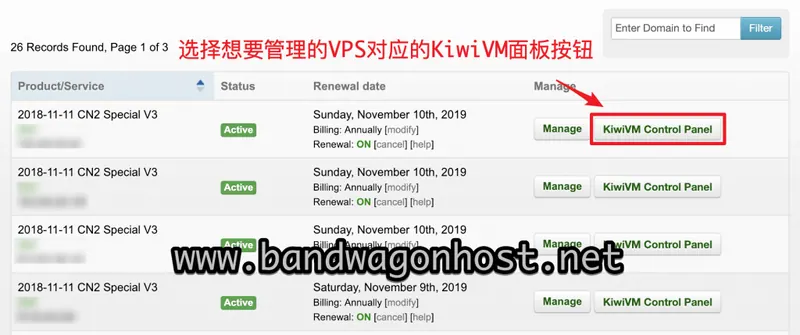
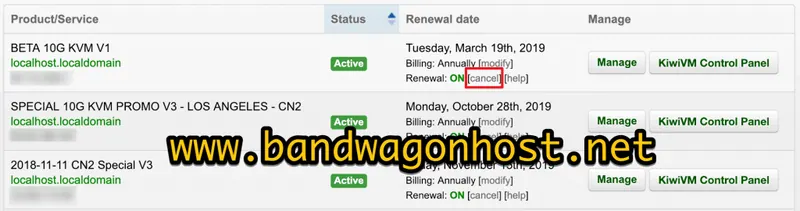
The legacy client area provided a separate KiwiVM Control Panel button for each VPS.
The source recorded the rule in 2019 as generating the bill on the due date.
The 2019 package comparison explains the different dimensions of the two labels: KVM represents virtualization architecture, and CN2 represents network lines.
Historical examples establish usage cycles based on purchase dates, and the zero-traffic day is not necessarily the first day of each month.
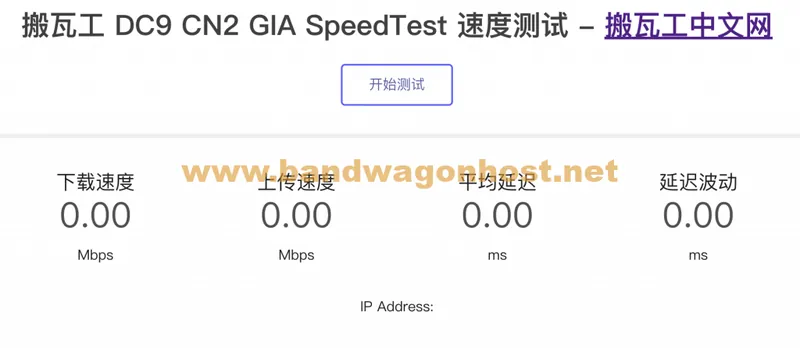
The public demo page offers different perspectives such as throughput, latency, and routing. First, select the entry point by data center.
GT and GIA refer to network categories, and you need to check the specific data center and billing information when making a purchase.
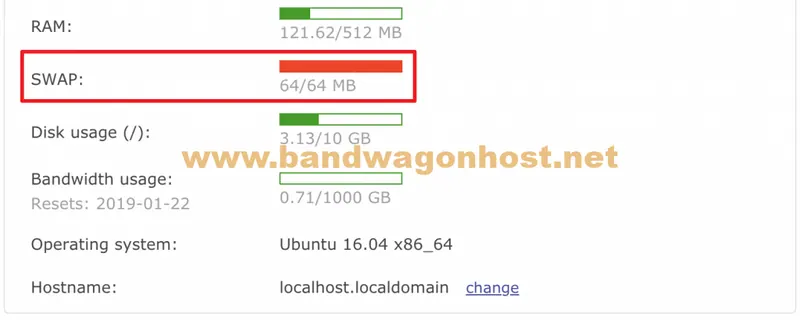
Swap refers to the swap space used by Linux to store some memory pages. When KiwiVM displays this column in red, it primarily indicates that the allocated swap space is in high usage.
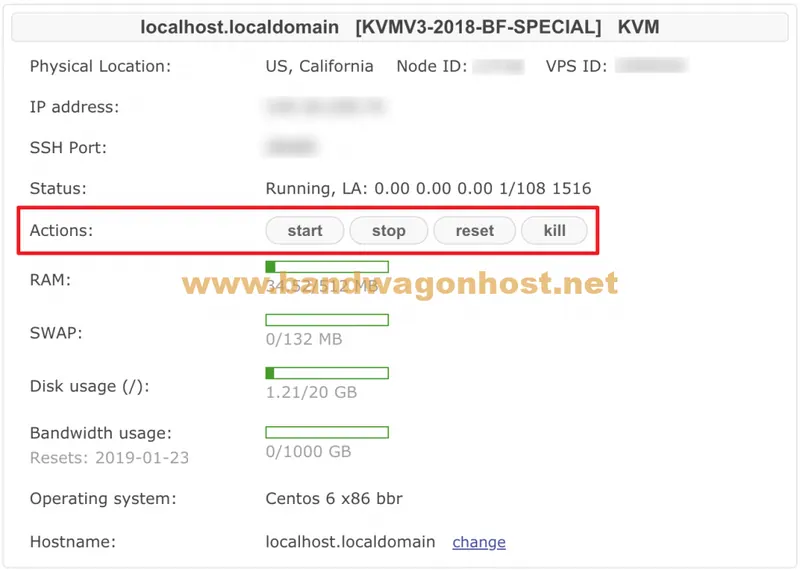
Start is used to power on the instance, Stop is for normal shutdown, and Reset will restart the instance.
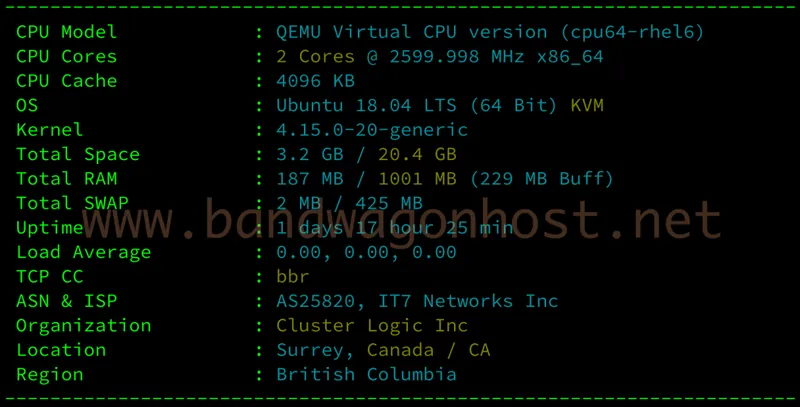
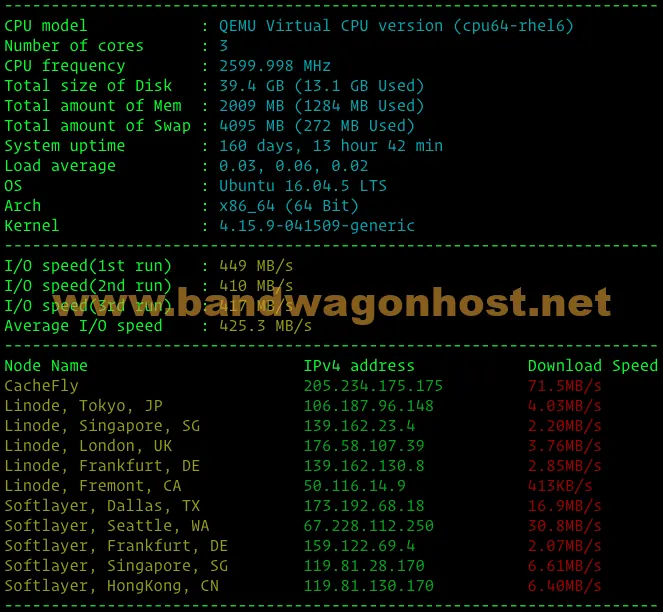
The source compares multiple VPS benchmark reports in the same document, with examples involving system and CPU information, disk read/write, and cross-region network throughput.
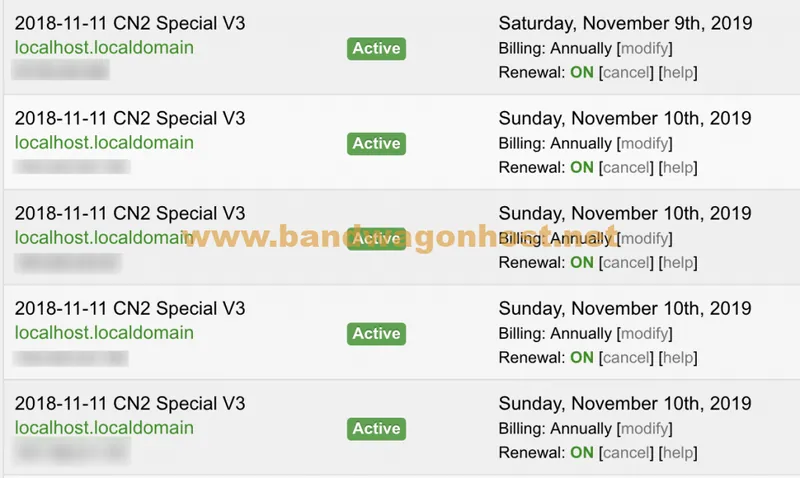
The same annual fee cannot identify whether the service can be renewed; the virtualization architecture of the old order is the basis for differentiation.
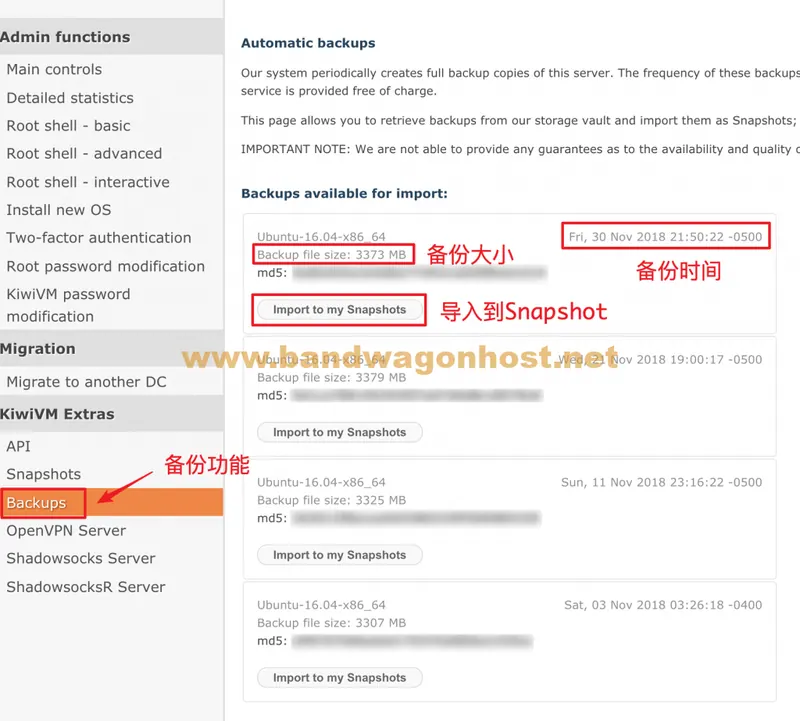
The interface logs from December 2018 show that Automatic Backups lists the system's saved copies by time, and adds the selected copy to the personal snapshot list before restoring.
The 2018 deployment record labeled Los Angeles DC8 as USCA_8. The source placed a demo page in that data center providing speed and line monitoring.
DC9 corresponds to USCA_9 in Los Angeles. The source was that the WordPress demo page, SpeedTest, and Looking Glass were deployed on a CN2 GIA instance that cost $88 per year.
Network speed is commonly measured in Mbps, while file transfer speed is commonly measured in MB/s; 8 Mbps equals 1 MB/s.
The reviewer used an instance located at DC8 CN2 and collected download and return information during the evening peak hours.
This historical record is for OpenVZ solutions and includes speed, disk and backhaul information after enabling BBR.
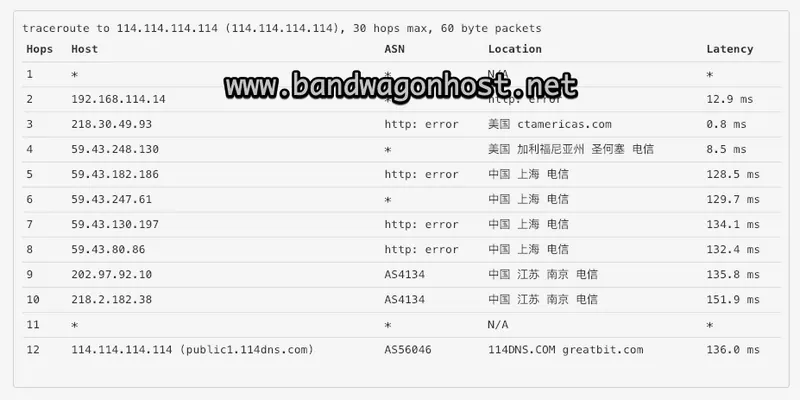
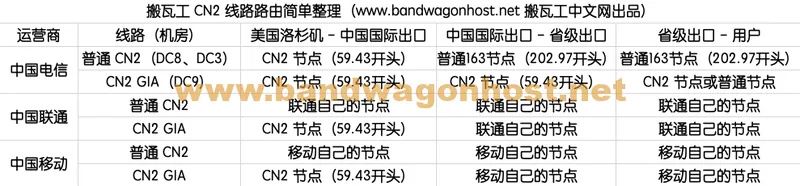
The old data center description compares the return routes of different operators separately: In the ordinary CN2 example at that time, China Telecom used CN2, while China Unicom and China Mobile could take their own direct connection paths.
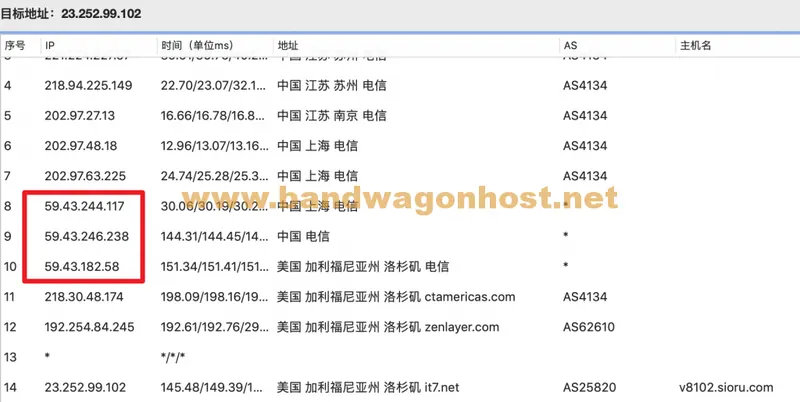
A set of cross-carrier routing records demonstrates the differences between domestic backbone, international segment, and access network identifiers.
The October 2018 line data discusses 163 backbone access separately from CN2 GT and CN2 GIA, and uses AS4134 to illustrate the background of common backbone networks.
The original test record stated that the performance of the download from mainland China was limited.